Mentioned in 4 Google reviews
Brakes are the one system in your car with zero room for error. Pads wear down a little every time you press the pedal, rotors take the heat from that friction and can warp or wear thin over time, and brake lines carry fluid under pressure that can leak if a seal goes bad. None of this happens overnight, but it does not reverse itself either. Once wear starts, it keeps going until something gets replaced. The result is longer stopping distances, a pedal that feels different under your foot, or noise you cannot ignore. That is a real problem on the 5 freeway or anywhere in San Fernando traffic, where the car in front of you can stop faster than you expect. Brake work is not the kind of repair to push to next month.
Signs You Need Brake Service
- Grinding or squealing when you slow down
- Pedal feels soft or sinks to the floor
- Car pulls to one side when braking
- Steering wheel shakes or vibrates while stopping
- A burning smell after driving downhill or in traffic
- Dash warning light for brakes stays on
Most drivers already know something is wrong before a mechanic even looks at the car. A grinding sound usually means the pad material is worn all the way down and metal is now hitting metal on the rotor, which is harder on the car and more expensive to fix the longer it continues. A soft or spongy pedal usually points to air trapped in the lines or a fluid leak somewhere in the system. A car that pulls hard to one side when you brake can mean a caliper is sticking or dragging unevenly. We hear these exact descriptions all the time from drivers in San Fernando and nearby Northridge, and each symptom points us toward a different part of the system before we even pull a wheel off.
Before we touch anything, we check the whole brakes system, not just the part that is making noise or feels off. That means pulling the wheels to measure pad thickness, checking the rotor surface for grooves or warping, looking closely at the calipers for sticking pistons or fluid leaks, and checking the condition and level of the brake fluid itself. This step matters because a noisy pad can be hiding a bigger issue underneath it, like a caliper that has been dragging for weeks. It is also how we figure out whether you are looking at a simple pad swap or something that involves the rotors and calipers too. Skipping this step is how small jobs turn into surprise repairs later.
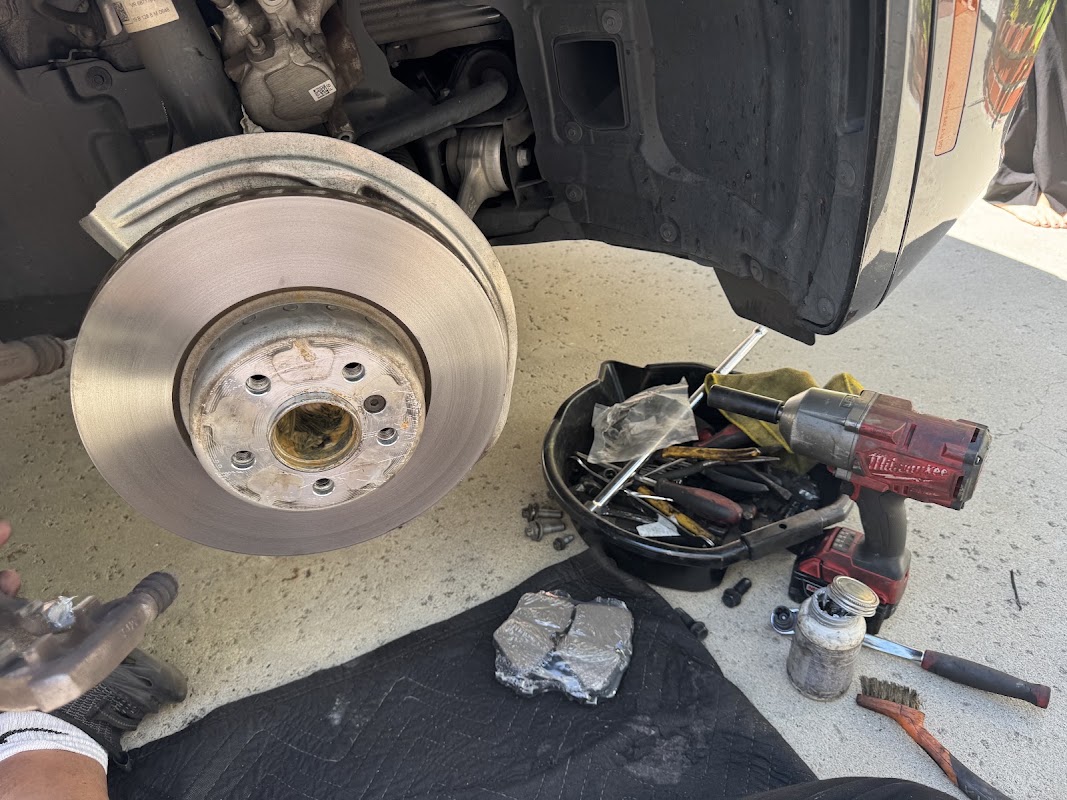
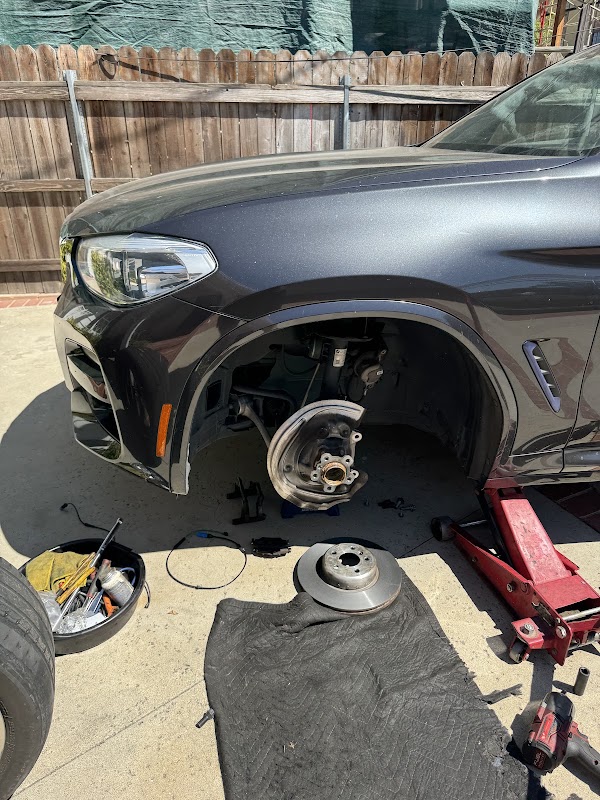
A typical brakes repair starts with removing the wheel, then the caliper, then the worn pads underneath it. From there we inspect the rotor closely to decide if it can be resurfaced and reused or if it has worn past the point of saving. New pads go in, the caliper gets reset so it seats properly against the rotor, and every bolt gets torqued back to spec before the wheel goes back on. While we are already in there, we check the brake fluid level and condition, since old or contaminated fluid changes how firm the pedal feels and how well the whole system responds. It is a straightforward process on paper, but every step depends on what the inspection found first.
What makes a brake job bigger or smaller really comes down to how far the wear has gone before anyone looked at it. A simple pad swap on a rotor that is still in good shape is quick, straightforward work. But once rotors are warped from heat, calipers are seized from age, or a brake line is actually leaking fluid, that adds parts and labor on top of the basic job. Letting a grinding noise continue for weeks usually means more metal-on-metal contact, which chews up the rotor surface and sometimes damages the caliper too. What would have been a pad replacement turns into a pad, rotor, and caliper job, all because the noise got ignored a little too long.
If your brakes are making noise, grinding, or the pedal feels soft or different than usual, try not to just keep driving on it like nothing changed. Avoid hard, sudden stops if you can help it, give yourself more following distance than normal, and get the car looked at as soon as you reasonably can. These are warning signs your car is giving you on purpose, not random noise to tune out. A brake issue caught early, while it is still just pads or a minor fluid problem, is a much simpler and smaller fix than one that gets ignored for another few months of driving on it.
Routine attention to your brakes is really what keeps small issues from becoming expensive ones, and that is true whether you drive a daily commuter or something you only take out on weekends. Pads, rotors, calipers, and fluid all wear at different rates depending on how and where you drive, so a car used mostly for stop and go city driving in San Fernando wears differently than one that spends more time on the freeway. Either way, the same basic warning signs apply. Noise, pulling, or pedal changes are your car telling you it is time for a closer look. Paying attention to those signs early, instead of waiting, is the simplest way to keep your brakes doing their one job well.
What to Tell Us When You Call
- Year, make, and model of your car
- What noise or feeling you are getting, grinding, squealing, soft pedal, pulling
- When it started and if it is getting worse
- Whether any dash warning lights are on